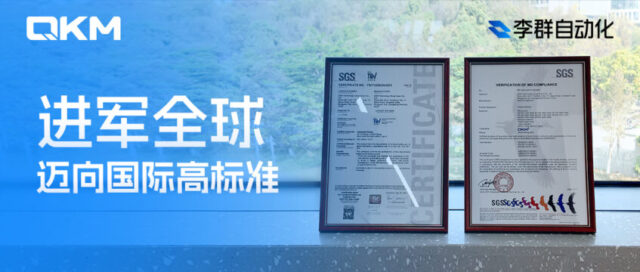
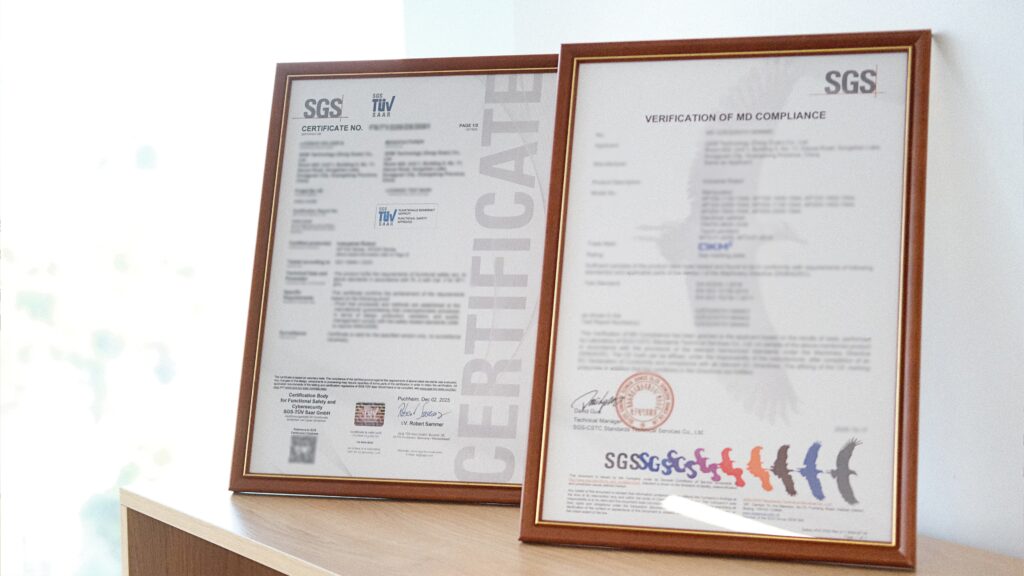
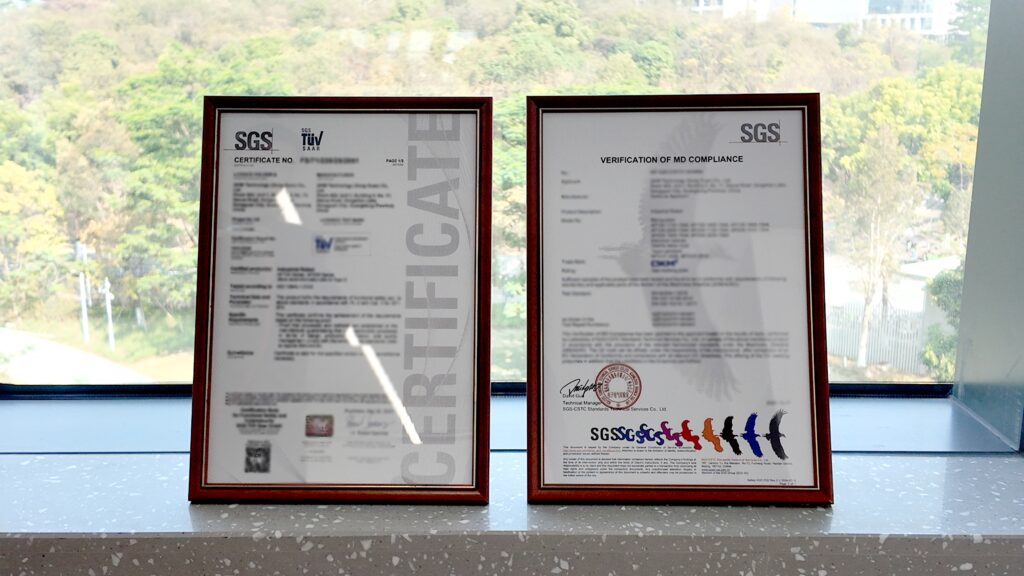
QKM has officially received the SGS-TÜV Saar Functional Safety Certificate under EN ISO 13849-1, as well as a CE Certificate, from SGS, the internationally recognized testing, inspection and certification organization.
This milestone demonstrates that QKM’s robot safety control systems have been assessed against internationally recognized safety standards, supporting the deployment of QKM robots in European and other global markets while helping customers maintain safe and efficient production.
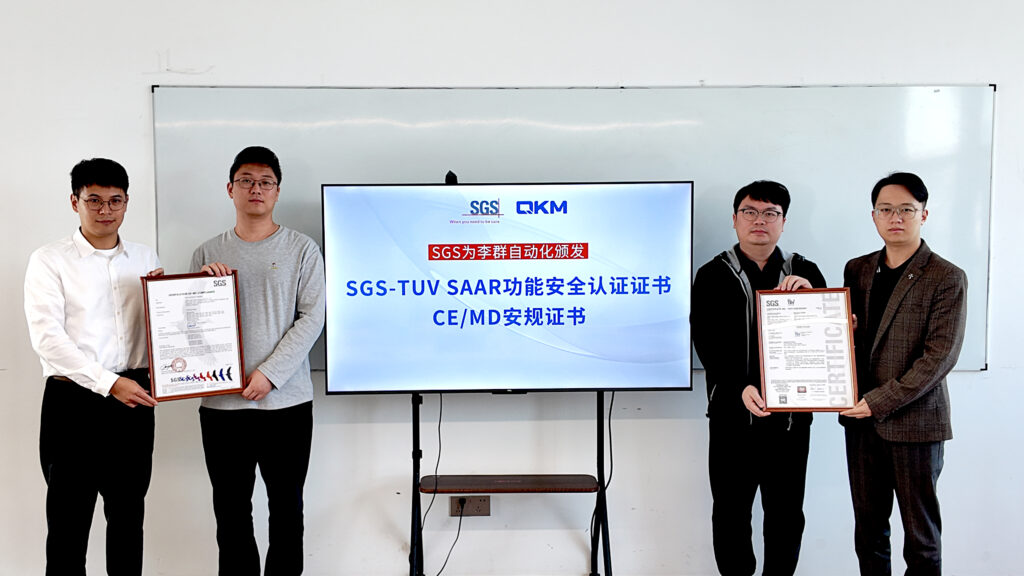

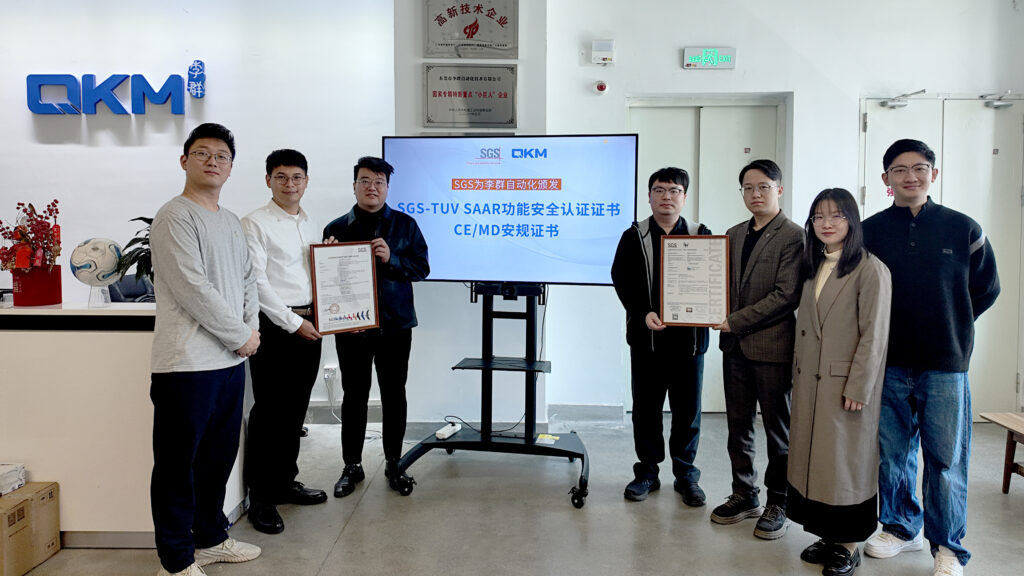
Two Global Credentials. Why Do They Matter?
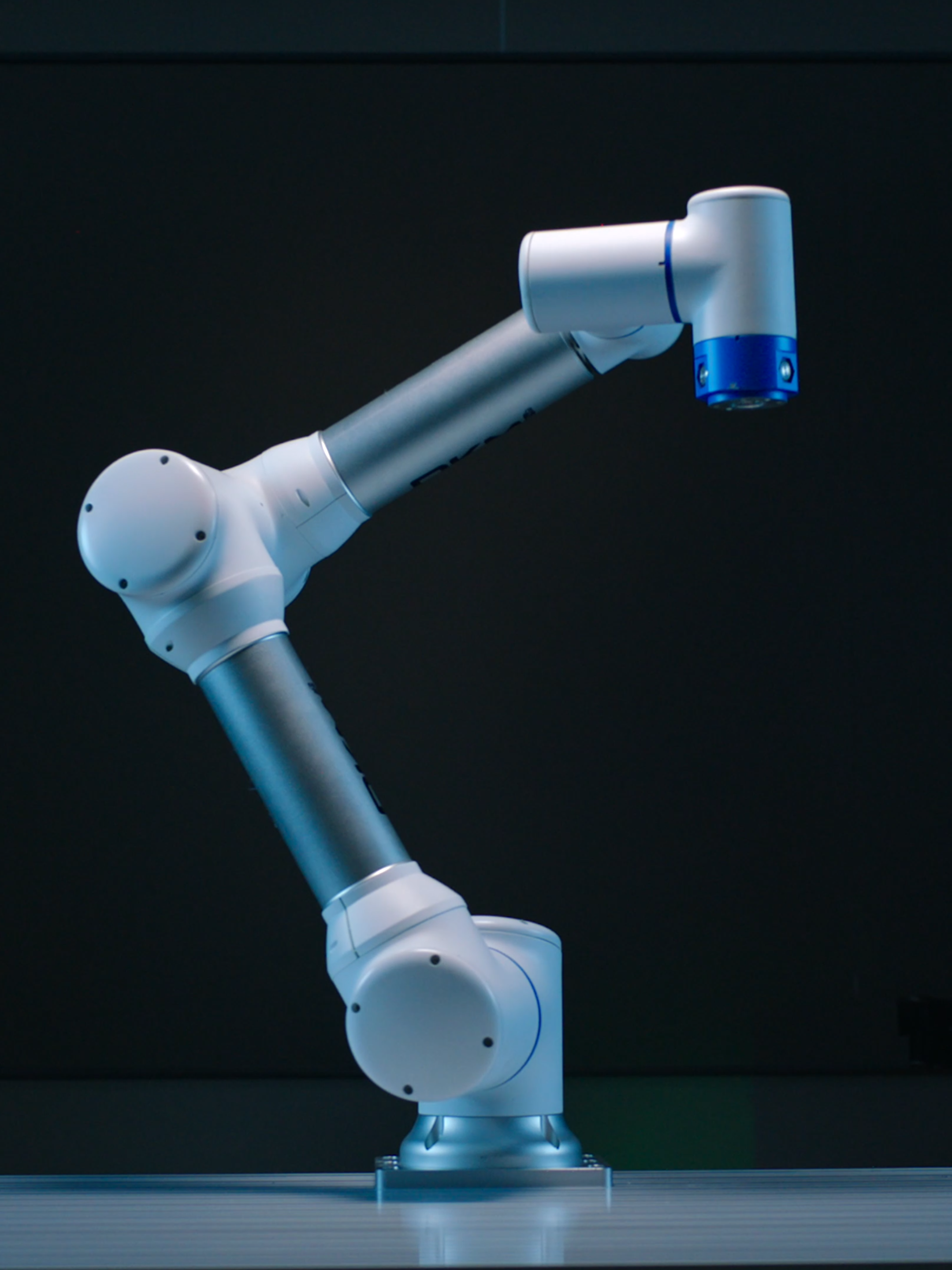
As part of this certification, QKM’s AP15X/AP25X robot systems successfully completed the functional safety assessment under EN ISO 13849-1 and received the SGS-TÜV Saar Functional Safety Certificate.
At the same time, the safety control system meets the applicable safety requirements under the EU CE framework and has received a CE Certificate.
The certification covers key safety functions including emergency stop and protective stop, providing recognized compliance credentials for deployment in Europe and other international markets.
1. CE Certification: A Gateway to the European Market
CE marking represents conformity with applicable EU requirements for products entering the European market, including requirements related to machinery safety and electromagnetic compatibility (EMC).
For industrial machinery, compliance involves meeting the applicable requirements and standards under the relevant EU regulatory framework.
2. Functional Safety Certification: A Benchmark for Safety-Related Control Systems
Functional safety is a key part of machinery safety compliance.
EN ISO 13849-1 is an internationally recognized standard for the safety-related parts of control systems (SRP/CS). It provides a framework for evaluating the safety performance of control systems used in industrial machinery.
EN ISO 13849-1: A Key Standard for Industrial Robot Functional Safety
EN ISO 13849-1 was central to this assessment. The standard defines methods for evaluating the safety performance of safety-related control systems.
What Is EN ISO 13849-1?
One of the most widely applied machinery functional safety standards, EN ISO 13849-1 focuses on evaluating:
- Safety functions related to control systems
- The architecture, reliability and fault response of safety circuits
The standard uses PL (Performance Level) to assess the ability of a system to maintain safety functions in the event of failures.
What Level Has QKM Achieved?
Based on the functional safety design and verification results:
- Target Performance Level: Cat. 3 / PL d
- Covered safety functions: Emergency Stop, User Emergency Stop, Protective Stop, and Safe Output for Emergency Stop Status
This means that, under a single-fault condition, the system is designed to maintain the effectiveness of its safety functions while providing fault detection and protective capabilities.
Engineering the Safety Architecture: From Functionality to Verified Safety
SGS certification reflects QKM’s focus on the underlying safety architecture of its robot systems. Three key design elements support the certified safety architecture.
1. Cat. 3 / PL d Safety Architecture
QKM adopts a Cat. 3 / PL d safety architecture for its core safety functions. This architecture is designed to maintain the required safety function in the event of a single fault, helping protect both personnel and equipment.
2. Dual-Channel Redundancy and Real-Time Monitoring
Hardware Redundancy
The emergency-stop circuit uses dual normally closed contacts. Two independent E-Stop signals are connected to the safety relay, forming a dual-channel safety circuit.
Closed-Loop Monitoring
Auxiliary contacts on the power relays provide real-time feedback on coil status. The feedback signals are sent directly to the safety relay for logic verification.
3. Fast Safety Response
The safety response time is 200 ms.
When an emergency stop is triggered, the system initiates Category 1 Stop (Cat. 1 Stop). After controlled motor deceleration, the servo power is disconnected to bring the system to a safe state.
Enabling Global Manufacturing: A Lithium-Ion Battery PACK Application
Within the new energy industry, lithium-ion battery manufacturing is one of the automation applications with stringent requirements for safety and operational stability.
QKM is bringing its robotics technologies and safety standards into battery manufacturing applications, supporting customers as they expand into global markets.
Case: QKM Lithium-Ion Battery PACK Adhesive Application
AP15X/AP25X heavy-payload parallel robots with CE certification, integrated with vision-guided positioning and closed-loop control.
A certified safety control system helps maintain safe operation during high-speed production.
Performance Highlights
Fast
Standard cycle time of 0.33 s/cycle, with efficiency 150% higher than traditional solutions and a 24/7 utilization rate of ≥95%.
Precise
A tape application yield rate of up to 99.5%.
Stable
Modular design enables changeovers within 10 minutes, supporting multi-batch and small-batch production for international customers.
Safety as the Foundation for Global Manufacturing
The SGS-TÜV Saar Functional Safety Certification marks an important milestone in QKM’s continued development of robot safety technology.
QKM will continue to advance functional safety and delive